

Pneumatic conveying solution for glass fiber reinforced plastic pellets
During the production and processing of glass fiber reinforced plastic pellets, traditional conveying methods often face issues such as fiber breakage, pipeline wear, frequent blockages, and dust dispersion. The hard fibers in the particles not only accelerate equipment aging but also cause material quality to decline, increasing maintenance costs and downtime. At the same time, high energy consumption and uncontrollable conveying speeds also limit the efficiency improvements of production lines.
Material characteristics
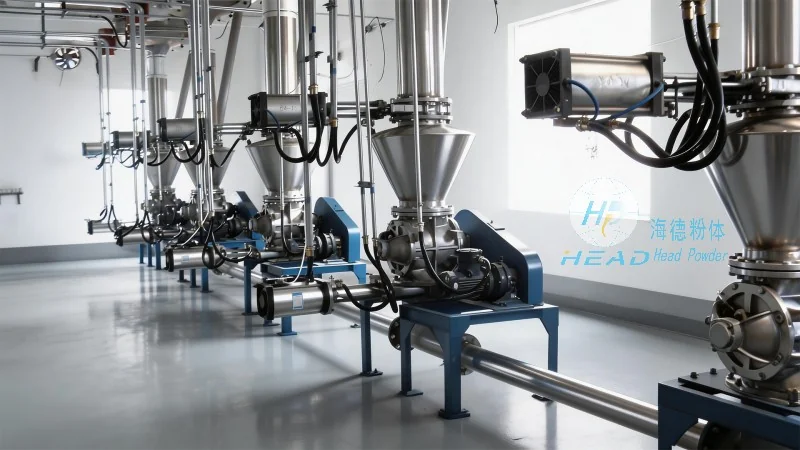
Glass fiber reinforced plastic particles (such as PP/PA/PC + glass fiber) have high hardness, low flow, anisotropy, and a tendency toward static electricity accumulation. The length and distribution of these fibers directly affect the strength of the final product, so strict control of shear force and collision frequency during conveying is necessary to protect fiber integrity.
Product Introduction
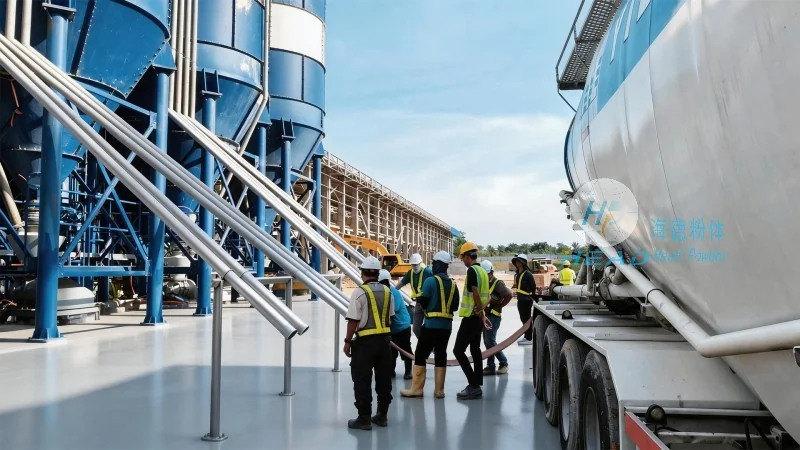
The pneumatic conveying system for glass fiber reinforced plastic pellets provided by Head Powder adopts positive pressure dilute phase or dense phase conveying modes, with customized designs based on material characteristics and on-site conditions. The core components of the system include wear-resistant elbows, anti-static pipelines, highly accurate feeding valves, and intelligent control systems, compatible with various particle sizes and fiberglass contents.
Product advantages
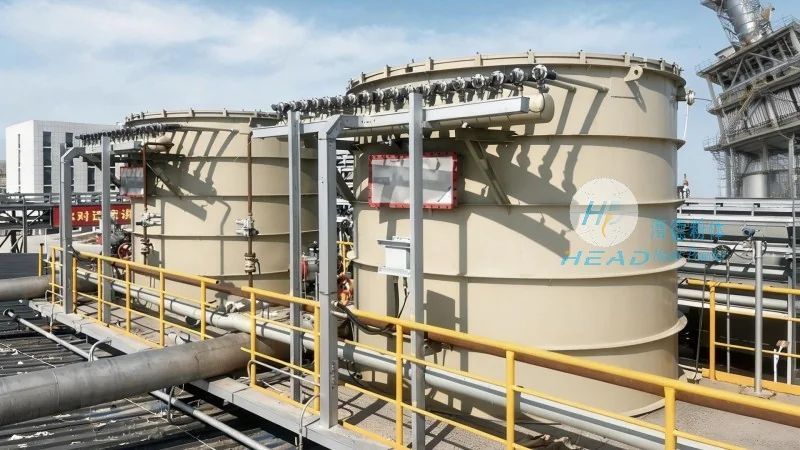
To address pain points in fiber breakage and equipment wear, we optimized the coating on the inner wall of the pipeline and the radius of elbow curvature, reducing the impact energy of particles to safety thresholds; Through variable frequency speed regulation and closed-loop pressure monitoring, it helps stabilize and control the conveying speed, avoiding fiber damage caused by instantaneous impacts; Integrated anti-static grounding and dust removal module effectively suppresses dust leakage, meeting environmental protection and safety requirements. Overall machine energy consumption is reduced by more than 15% compared to conventional solutions, and maintenance intervals are extended by 2~3 times.