

Baking soda pneumatic delivery solution
In industries such as food, pharmaceuticals, and chemicals, the transportation of baking soda (sodium bicarbonate) often faces challenges such as dust buildup, material clumping, low conveying efficiency, and equipment corrosion and wear. Traditional manual or mechanical conveying methods not only involve high labor intensity but also easily cause environmental pollution and material waste, affecting production continuity and product quality. How to achieve efficient, sealed, and low-loss delivery of baking soda has become an urgent pain point for enterprises.
Material properties: The physical and chemical characteristics of baking soda
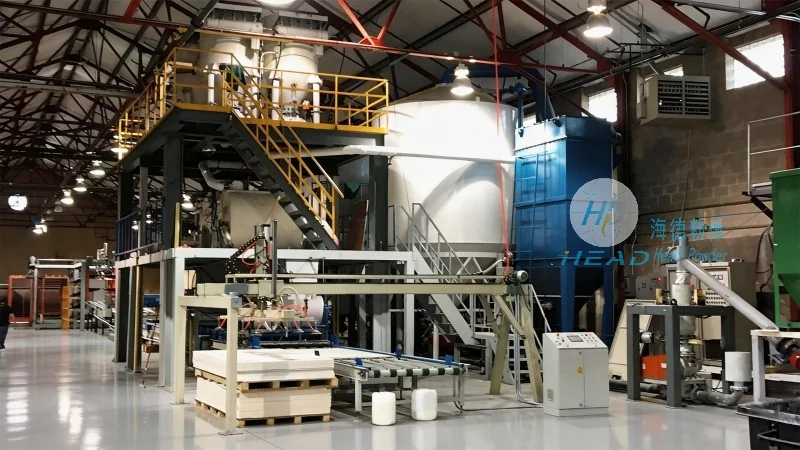
Baking soda is a white powder or fine crystals, with a density of about 0.5~0.9g/cm³, typical hygroscopic, and tends to clump in humid environments. At the same time, baking soda decomposes when heated or in contact with acidic substances to produce carbon dioxide, so temperature and humidity must be controlled during transportation. Its particles are fine and have moderate flowability, making it a dust-prone powder material.
Product Introduction: Head Powder Baking Soda Pneumatic Conveying System
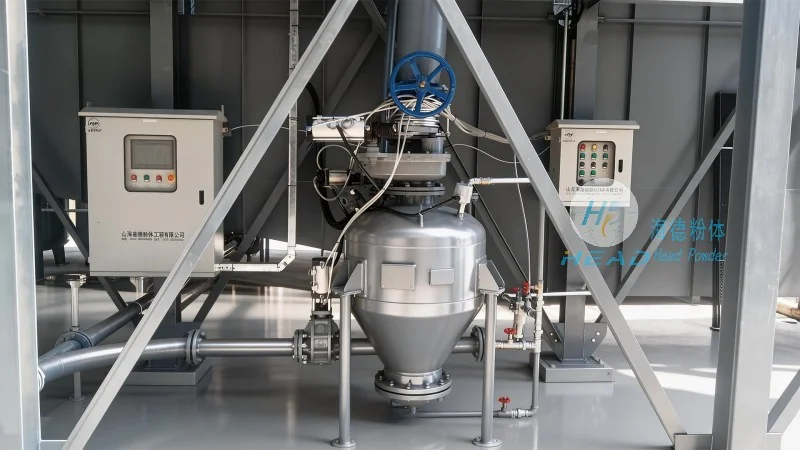
The baking soda pneumatic conveying system provided by Head Powder is a sealed conveying solution specially designed for the characteristics of baking soda materials. The system uses positive or negative pressure pneumatic conveying methods, transporting baking soda from the storage silo to the point of use through pipelines, with no dust leakage throughout the process, effectively preventing material moisture and caking. The equipment includes sending tanks, rotary feeders, dust collectors, control valves, and automation control systems, allowing for customized design according to customer site conditions.
Product Advantages: Targeted solutions to customer pain points
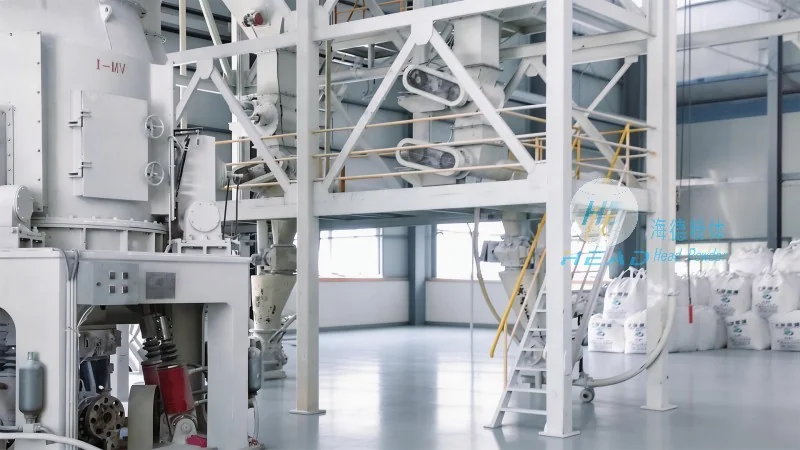
To address dust issues during baking soda transport, the system is equipped with a high-efficiency pulse baghouse dust collector, with emission concentrations below national environmental standards; To address moisture-absorbing caking issues, the pipeline interior is treated for moisture resistance and optional heating pipes are provided to improve material flow; To address equipment wear issues, key components use wear-resistant materials to extend service life; To address conveying efficiency issues, by adjusting the air source pressure and conveying speed, stable and controllable feeding rates can be achieved to meet different process requirements. In addition, the entire system uses PLC automated control, reducing manual intervention and improving production safety.