

Pneumatic conveying solution for expanded pellets
In the processing and transportation stages of extruded pellets, enterprises generally face issues such as easily crushed materials, dust accumulation, low manual handling efficiency, and limited production line layout. Traditional mechanical conveying methods not only increase product loss but also struggle to meet the high hygiene and safety requirements of industries such as food and feed. At the same time, relatively high-intensity repetitive labor also raises labor costs and management difficulties for enterprises.
Material characteristics
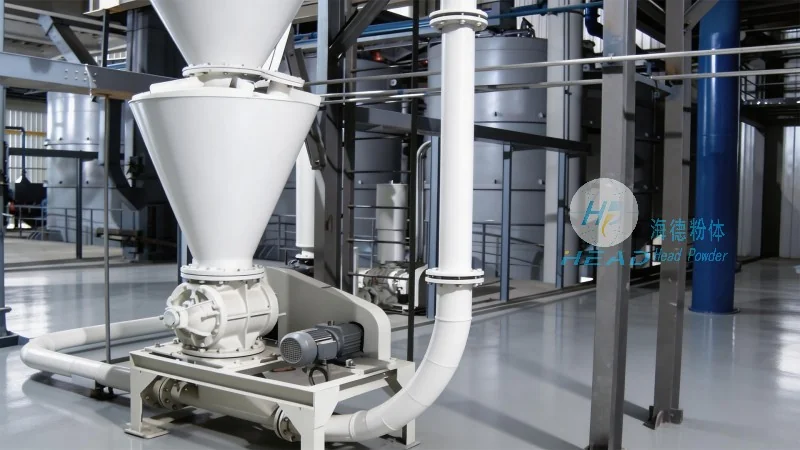
Expanded particles have a loose texture, high porosity, easily worn surfaces, low density, and poor flowability. During conveying, collisions between particles and between particles and the pipe wall can easily lead to crushing and powdering, affecting product quality. In addition, some puffed particles also have typical hygroscopic properties, which requires high sealing and cleanliness in the conveying environment.
Product Introduction
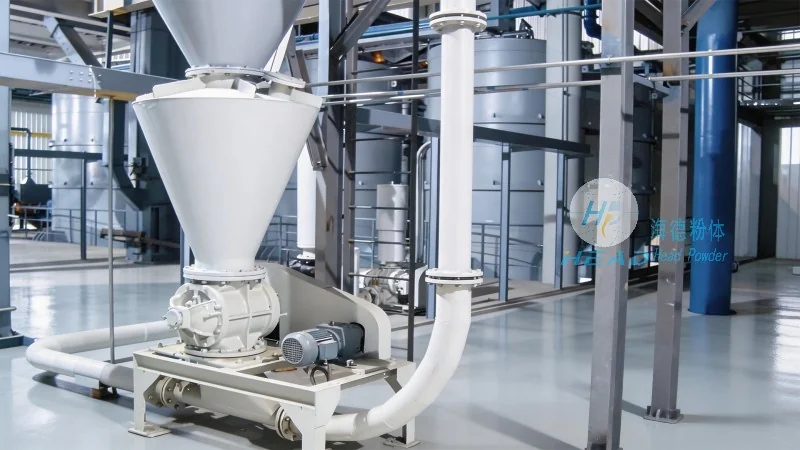
Head Powder has developed a pneumatic conveying system for puffed particles, tailored to the unique physical properties of puffed particles. This system uses sealed pipeline conveying methods of positive or negative pressure, combined with dedicated feeders and separation devices, to achieve automated circulation of pellets from storage silos to packaging, processing, and other terminal equipment. The system can be customized according to the user's on-site space, production capacity, and material characteristics, helping to ensure a stable and gentle conveying process.
Product advantages
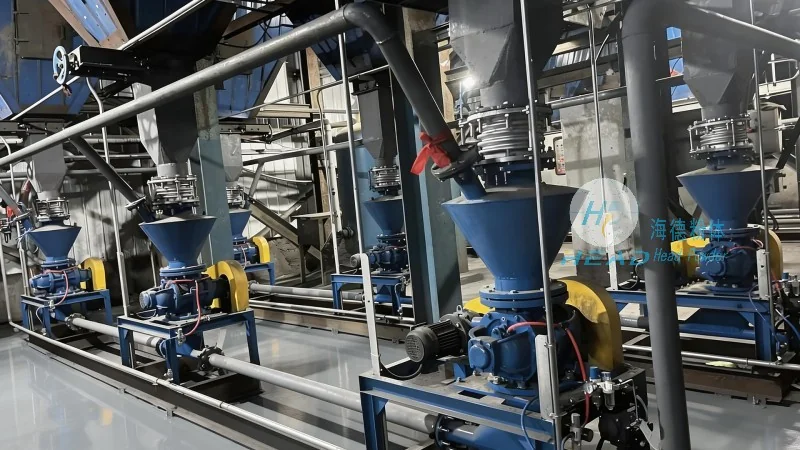
To address customer pain points, Head Powder offers solutions including: sealed pipeline transportation effectively prevents dust leakage and reduces material loss; Adopts a low-speed, large-section design to reduce particle crushing rate; Equipped with an intelligent control module for remote start/stop, flow regulation, and fault alarms, reducing manual intervention; The modular structure facilitates installation and later expansion, adapting to different production line layouts.