

Sanitary grade project for edible starch in Zhengzhou, Henan
In the production process of edible starch, hygiene levels directly affect product safety and quality. A company located in Zhengzhou, Henan, is a relatively large local starch processing enterprise. With increased production capacity and stricter industry standards, hygiene hazards in the original powder transportation stage have become increasingly prominent. Head Powder has tailored a sanitary-grade pneumatic conveying engineering for edible starch based on its actual working conditions, which better meets the requirements for food-grade clean production.
Customer pain points
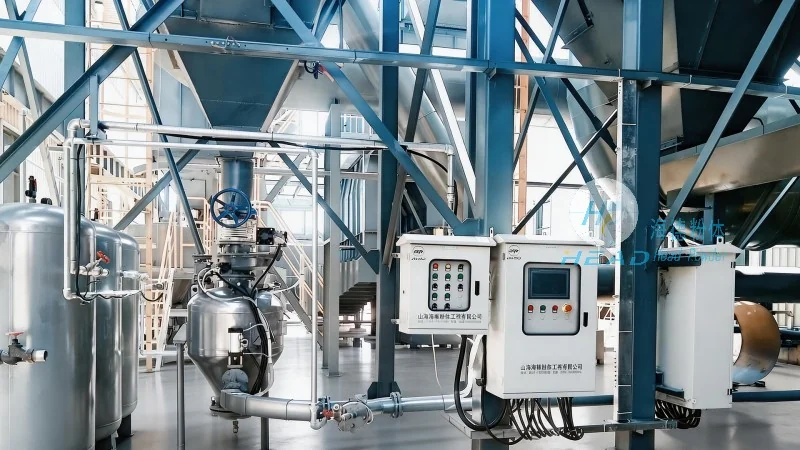
The company's original powder conveying equipment was made of ordinary carbon steel, which had welding dead spots and pipeline blind spots inside, making it difficult to clean thoroughly after long-term operation and posing a high risk of microbial growth. At the same time, manual feeding and open transfer processes cause dust to overflow, not only polluting the workshop environment but also increasing the likelihood of cross-contamination. In addition, the equipment structure is complex, and disassembly and disinfection are time-consuming and labor-intensive, severely limiting the flexibility of production scheduling. As companies pass ISO22000 food safety management system certification, the original conveying systems can no longer meet the hygiene standards of the new audit, and there is an urgent need to upgrade to verifiable and traceable hygiene-grade solutions.
Head Powder Solutions
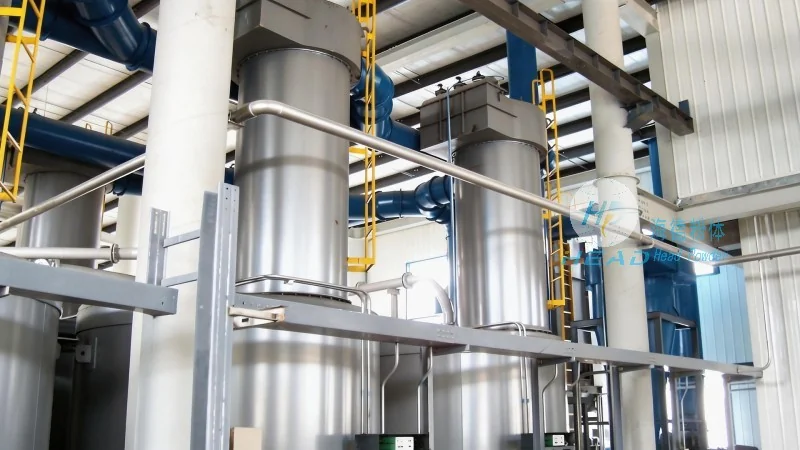
After in-depth on-site surveys, the Head Powder team designed the pneumatic conveying pipeline with an all-stainless steel 304L material, polishing the inner wall to Ra ≤0.4μm to fully eliminate material residues and bacterial attachment points. The system is equipped with modular quick-install clamp connectors, allowing tool disassembly and cleaning, and supports online CIP cleaning and SIP sterilization. A closed-loop negative pressure conveying mode has been introduced, with the entire process from raw material feeding to finished product silos sealed and zero dust leakage. After the entire project passed on-site acceptance, the company's starch production line maintained a stable cleanliness standard, shortened the cleaning cycle by 60%, and passed the annual food safety audit in one go.