

Case Study of Low-Wear Conveying of Glass Fiber Micropowder in Xiangyang, Hubei
A glass fiber micropowder manufacturer in Xiangyang, Hubei Province has long faced high wear and tear issues during material transportation, resulting in frequent equipment replacement and high maintenance costs. At the same time, the micropowder particle size is damaged by impact, affecting product quality. In response to this situation, Head Powder conducted in-depth research and customized a low-wear conveying solution for the company, improving the impact and friction issues of materials inside the pipeline, achieving stable and efficient conveying operations.
Case Summary
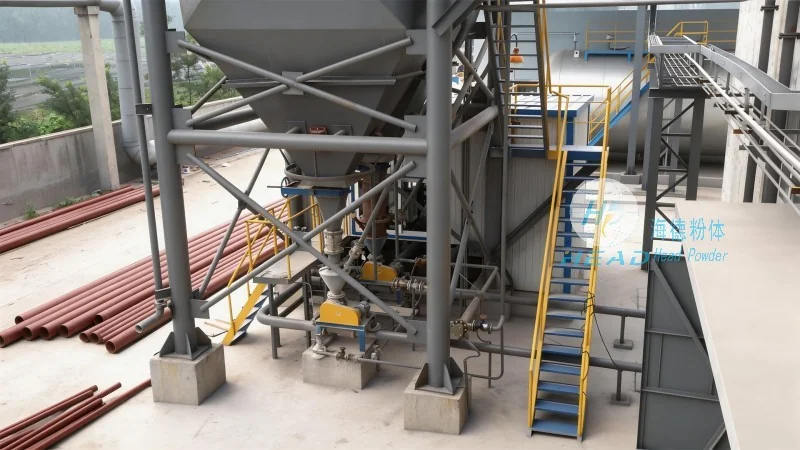
A company located in Xiangyang, Hubei, specializes in the deep processing and supply of glass fiber micropowder. In the original conveying stage, due to the high hardness and fine particle size of the material, traditional pneumatic conveying systems suffer from severe pipeline wear and powder crushing. After taking over, Head Powder redesigned the conveying path and power parameters based on on-site conditions, adopting low-wear elbows, wear-resistant linings, and slow-speed airflow control technology, which reduced mechanical losses during conveying.
Customer pain points
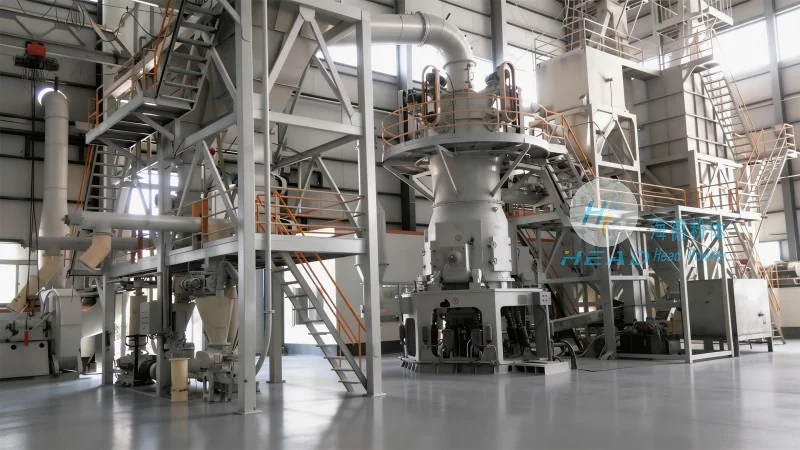
1. Severe pipeline wear: Fiberglass micropowder has high hardness and sharp edges. Conventional pipelines show perforations after just a few months of use, requiring frequent shutdowns for replacement.
2. High powder crushing rate: Traditional high-pressure and high-speed conveying cause micropowder particles to collide and crack, resulting in excessive particle size distribution and affecting downstream application performance.
3. Excessive energy consumption and noise: To overcome wear, the air source pressure is increased, causing electricity bills to soar and causing severe noise pollution on site.
4. Short maintenance cycles and high costs: Core components are easily worn, spare parts inventory occupies capital, affecting production continuity.
Product advantages
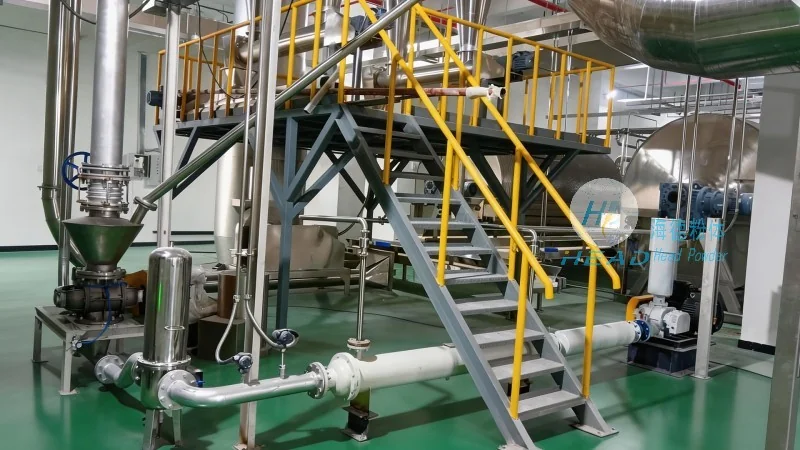
1. Low-wear structural design: Uses a large curvature radius elbow and ceramic composite wear-resistant lining, allowing smooth steering during material flow, reducing impact, and extending pipeline lifespan by more than three times.
2. Intelligent airflow control: Automatically matches conveying air speed and gas-solid ratio according to material characteristics, reducing particle collisions while aiding suspension, and improving powder integrity to over 98%.
3. Modular integration: The complete set of equipment includes units for feeding, conveying, separation, and dust removal, enabling quick on-site installation with reserved expansion interfaces to accommodate future capacity increases.
4. Energy-saving and silent operation: The optimized pneumatic system reduces overall energy consumption by about 20%. Combined with soundproof covers and silencers, the working environment noise is kept below 75dB.