

Food Additive Clean Delivery Project in Linyi, Shandong
In Linyi, Shandong, a company specializing in food additive production faces the need to upgrade its clean delivery process. As market demands for product purity and hygiene standards continue to rise, traditional conveying systems can no longer meet core requirements such as dust-free, sealed, and automated production environments. As a professional service provider in the powder conveying field, Head Powder conducted in-depth research into the company's actual working conditions and tailored a customized clean conveying engineering plan for food additives, achieving fully sealed and automated operation from raw material feeding to finished product packaging.
Customer pain points
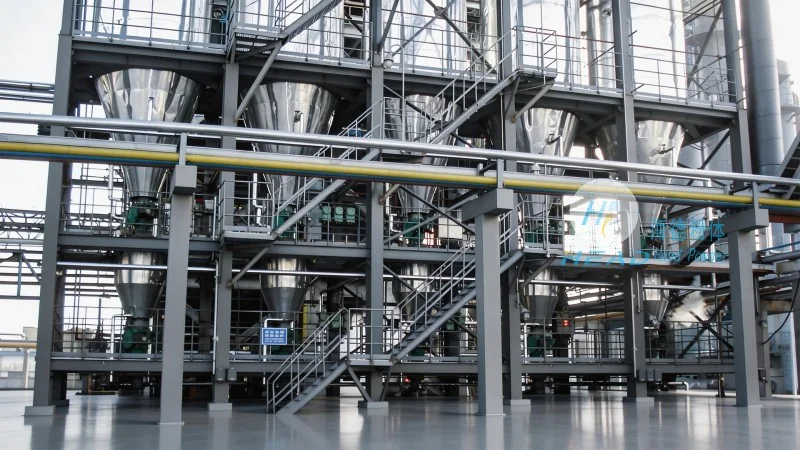
The company's original conveying equipment had multiple sanitary dead spots, making materials easily contaminated by environmental dust and foreign matter during transfer, affecting product quality. At the same time, open conveying leads to the leakage of large amounts of fine dust, which not only leads to raw material waste but also seriously threatens the respiratory health of operators, and puts ongoing pressure on workshop cleanliness management. Additionally, the combination of manual handling and semi-automated equipment results in low overall production efficiency, making batch consistency difficult to support and making it increasingly difficult to meet increasingly stringent industry audits and customer factory audit requirements.
Product advantages
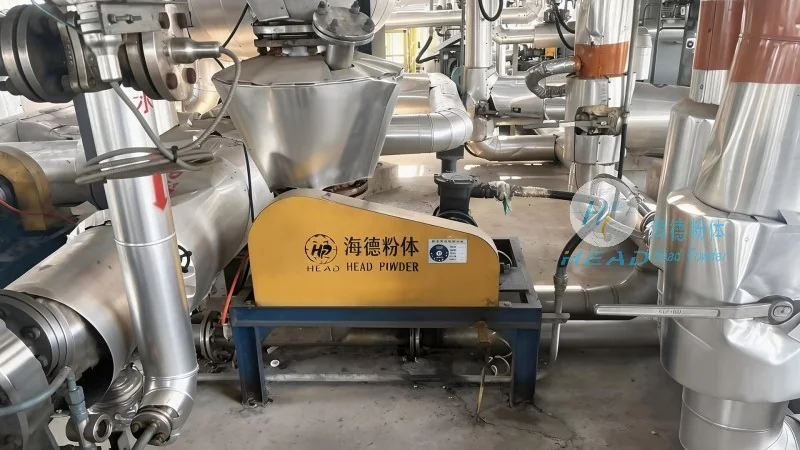
To address these pain points, Head Powder has designed a clean system centered on sealed negative pressure pneumatic conveying. The system uses food-grade stainless steel pipes and sealing connectors to prevent material leakage and contamination during transportation. Through more accurate airflow control and automated valve switching, various materials can be delivered in measured quantities on demand, reducing the frequency of manual intervention. A high-efficiency pulse reverse blow dust removal device is installed at the end of the system, which helps meet emission standards while reusing recovered materials, effectively reducing operating costs. The entire solution underwent rigorous on-site commissioning and cleanliness verification, ultimately helping the client achieve the expected goals of a tidy workshop, stable products, and increased production capacity.