

Pneumatic conveying solution for silicon carbide powder
Due to its high hardness and strong abrasive nature, silicon carbide powder often causes rapid equipment wear and frequent shutdowns for maintenance under traditional mechanical conveying methods. Additionally, open conveying generates large amounts of dust, pollutes the workshop environment, and threatens operator health. In addition, materials tend to agglomerate easily and have poor flowability, causing blockages in the conveying pipelines and seriously affecting production continuity.
Material characteristics: high hardness, strong abrasion, easy agglomeration
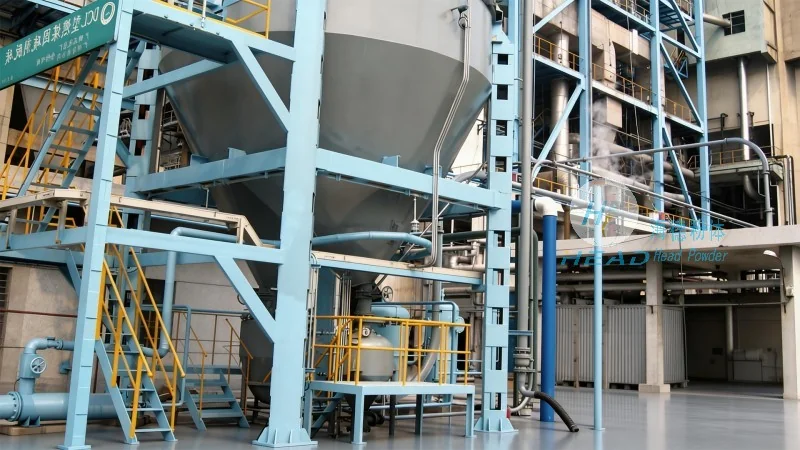
Silicon carbide powder features a Mohs hardness as high as 9.5, with sharp particle edges that cause severe cutting wear on contact parts; it also has a large specific surface area, is prone to moisture absorption and agglomeration, and can generate static electricity and agglomeration in airflow. These characteristics require the conveying system to have high wear resistance, sealed dust resistance, and anti-clogging capabilities.
Product Introduction: Head Powder Silicon Carbide Pneumatic Conveying System
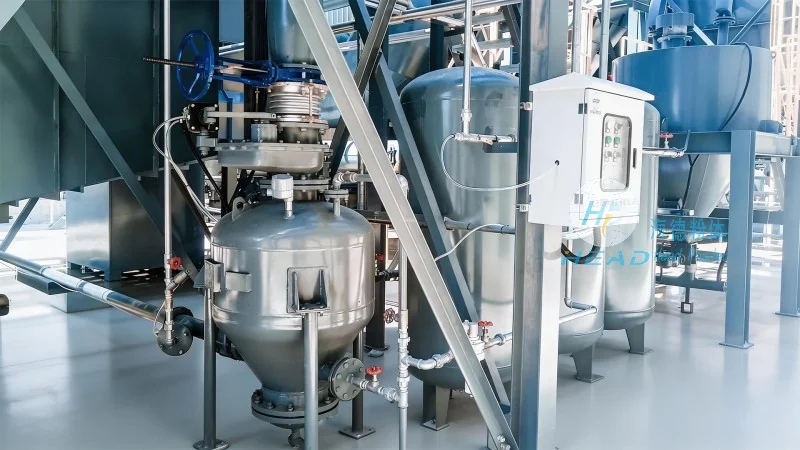
Head Powder offers customized pneumatic conveying solutions tailored to the characteristics of silicon carbide powder. Core equipment includes: wear-resistant sending tanks (lined with ceramic or imported wear-resistant steel), sealed pipelines, high-efficiency air sources (Roots fans or air compressors), and intelligent control systems. The system uses positive or negative pressure dense phase conveying methods, achieving stable and low-speed delivery by adjusting the gas-solid ratio, thereby reducing pipeline wear and material breakage.
Product Advantages: Providing reliable solutions to pain points
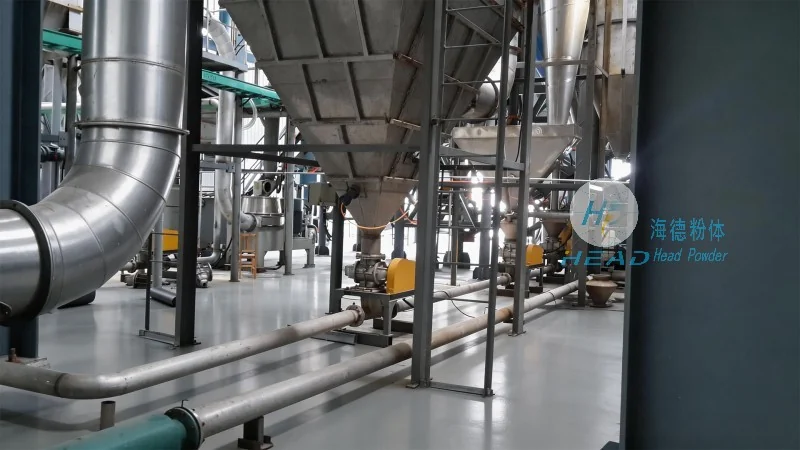
1. Thickened wear-resistant pipes and special elbow design significantly extend service life and reduce replacement frequency.
2. Fully enclosed conveyor system with no dust leakage, meeting environmental protection and labor protection requirements.
3. Low air speed, high-concentration conveying mode effectively suppresses material agglomeration and prevents pipeline blockages.
4. The automated control system monitors pressure and flow in real time, automatically alarms faults and shuts down the machine, reducing manual inspection costs.