

Pneumatic conveying solution for alumina powder
During the processing and use of alumina powder, traditional conveying methods often face issues such as dust swirling, material blockages, and severe equipment wear. This not only affects the workshop environment and employee health but also leads to production interruptions and rising maintenance costs. At the same time, alumina powder has poor flowability and is prone to moisture absorption and caking, which places high demands on the sealing, stability, and wear resistance of the conveying system. How to achieve low energy consumption, zero leakage, and continuous, stable conveying has become an urgent problem for many enterprises.
Material characteristics
Alumina powder is a white powder with high hardness and a high melting point, high density, fine particles, and strong abrasive properties. Its fluidity varies significantly with humidity, making it easy to adhere and accumulate on the inner walls of pipelines, and it is sensitive to impact. These characteristics require the conveying system to have good airtightness, wear-resistant lining, and relatively accurate airflow control to avoid material damage and pipeline blockages.
Product Introduction
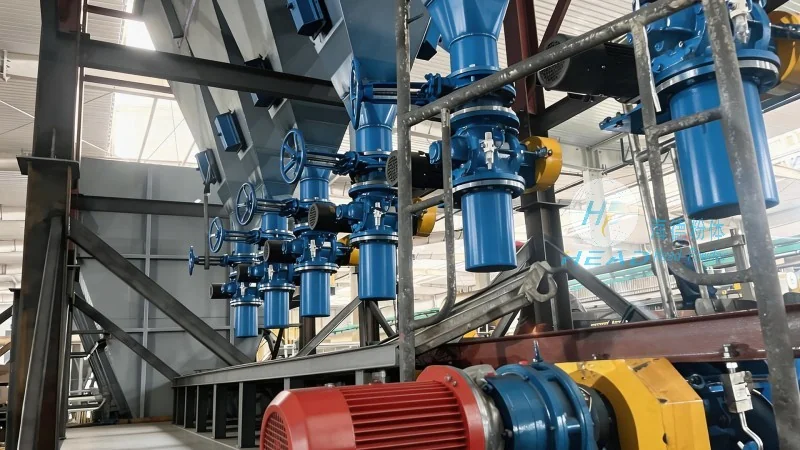
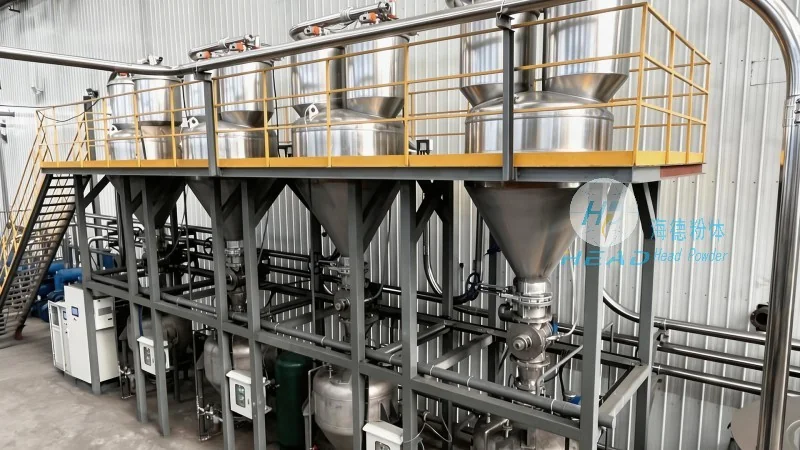
Head Powder offers customized alumina powder pneumatic conveying systems, covering various conveying solutions such as positive pressure dilute phase, positive pressure dense phase, and negative pressure suction transport. The system consists of a feeding device, conveying pipelines, air supply equipment, dust separation and removal, and intelligent control units. It can be customized for non-standard design according to customer site conditions (conveying distance, height, output, spatial layout, etc.). All parts that come into contact with materials are treated with wear-resistant materials or surface hardening to ensure continuous operation.
Product advantages
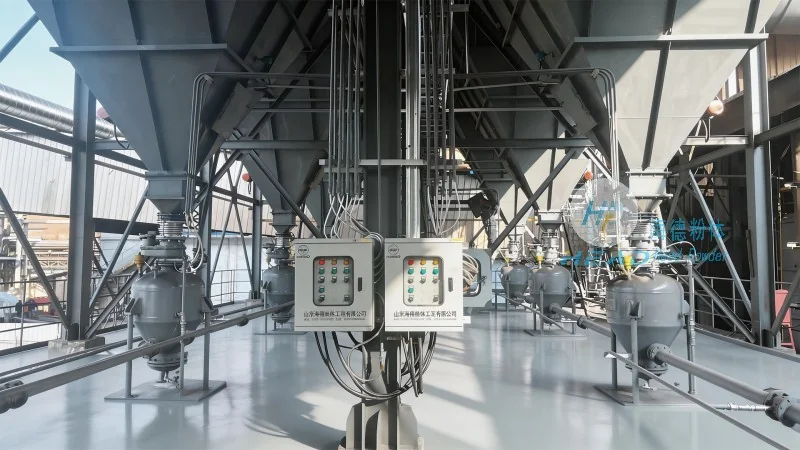
To address pain points such as dust generation, clogging, and high wear during transport, Head Powder uses fully enclosed pipelines for transportation, preventing dust leakage from the source; By optimizing airflow velocity and material-gas ratio, pipeline wear and energy consumption are effectively reduced; Equipped with intelligent pressure monitoring and automatic blockage clearing systems to reduce manual intervention; The modular design facilitates installation and expansion, while also supporting DCS/PLC remote control, helping factories achieve automation upgrades.