

Case Study of Bridging Conveyance of Rubber Additive Powder in Luoyang, Henan
This case focuses on the transformation of the powder conveying process at a rubber additive manufacturer in Luoyang, Henan. The company has long been troubled by frequent bridging issues during powder transportation, resulting in high production line downtime and high labor cleaning costs, severely impacting overall capacity. After on-site diagnosis and process analysis, Head Powder provided them with a targeted anti-bridge conveying solution, successfully achieving continuous and stable powder conveying operations.
Case Summary
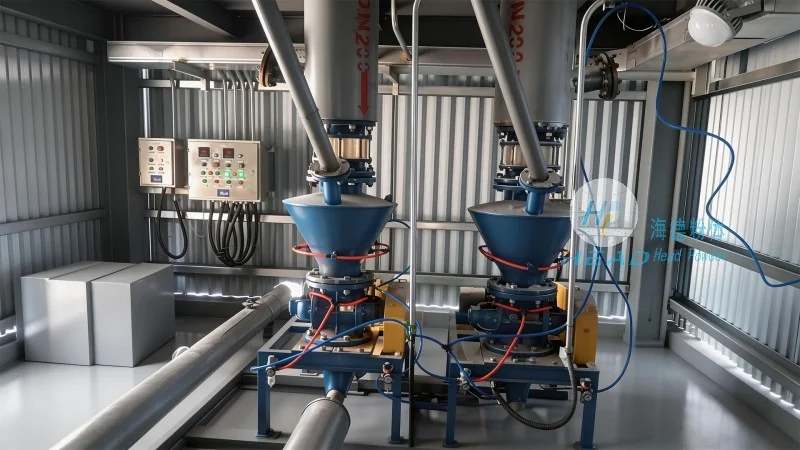
A rubber additives manufacturer in Luoyang, Henan, mainly produces various powdered rubber additives, with a relatively large annual output scale. Its original conveying system combined traditional pneumatic and mechanical conveying, but when handling fine-grained and moisture-sensitive powders, bridges and blockages frequently occurred at silos, pipelines, and transfer points, requiring shutdowns and cleaning 2-3 times per week on average, resulting in high equipment maintenance costs.
Customer pain points
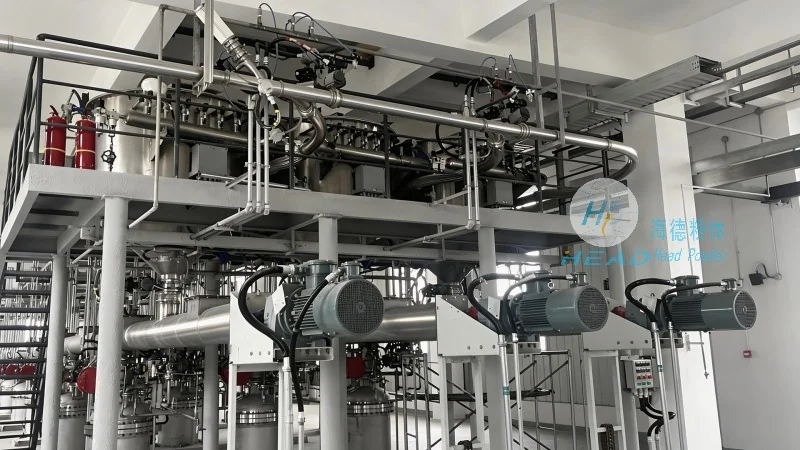
Powder bridging is a common technical challenge in the rubber additives industry. The main pain points faced by the company include:
- Powder tends to form cavities or arches at the silo outlet, preventing smooth descent;
- Severe material accumulation at elbows and valves in the conveying pipeline requires manual tapping and vibration to clear the issue;
- Frequent shutdowns for cleaning have reduced production efficiency by about 30%, and manual cleaning poses safety risks due to dust exposure;
- Some powders have been retained for too long in bridging, causing moisture absorption and agglomeration, affecting downstream process stability.
Product advantages
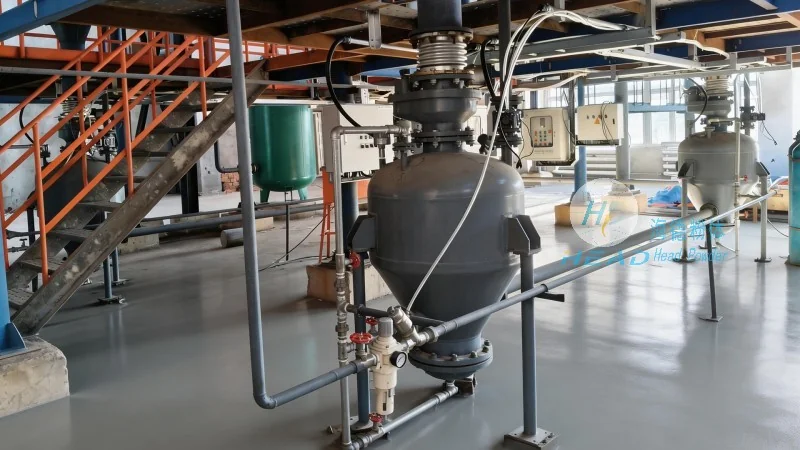
To address these pain points, Head Powder offers a customized anti-bridge powder conveying system. This system approaches three aspects: silo structure optimization, pneumatic conveying parameter adjustment, and auxiliary arch-breaking devices. The specific advantages are as follows:
- Silo anti-bridge design:Uses optimized taper angles and low-friction coatings on the inner wall, combined with a pneumatic arch-breaking device at the bottom, keeping the powder in a constant flowing state;
- Adaptive adjustment of conveying pipelines:Redesign the pipe bending ratio and airflow velocity based on powder physical parameters (particle size, moisture content, angle of rest, etc.) to reduce pipeline resistance;
- Intelligent Control Integration:Equipped with pressure sensors and real-time monitoring systems, it automatically activates backblowing or vibration functions when the silo pressure is abnormal, enabling automated response to anti-bridge protection;
- Modular Installation and Maintenance:The entire equipment adopts a quick-release interface design, reducing daily cleaning and maintenance time by 70% without the need for professional operation.
After the upgrade, the continuous operation cycle of the production line was extended from the original 3 days to over 30 days, powder conveying efficiency increased by 35%, manual intervention was reduced by 90%, and production stoppages caused by bridging were effectively alleviated.