

Pneumatic conveying solution for zeolite particles
Zeolite granules often face issues such as dust swirling, pipeline blockages, material crushing, and excessive energy consumption during traditional transportation. Manual operation is not only inefficient but also difficult to maintain continuity and stability in the conveying process. Especially when handling high humidity or fine-grained zeolite, equipment wears out quickly and maintenance costs remain high, restricting the automation upgrade and capacity improvement of production lines.
Material characteristics
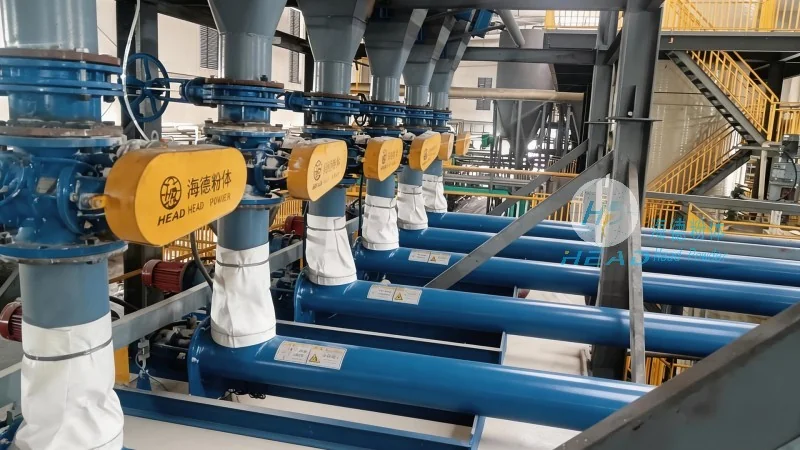
Zeolite particles are porous, highly adsorptive mineral materials with moderate density but prone to static electricity on their surfaces. They have a wide particle size range (usually 0.5~5mm), and some varieties contain normal moisture. Its particles are quite brittle, easily damaged during mechanical conveying, producing fine powder, which affects subsequent performance. Therefore, the conveying system must balance gentleness, sealing, and anti-caking characteristics.
Product Introduction
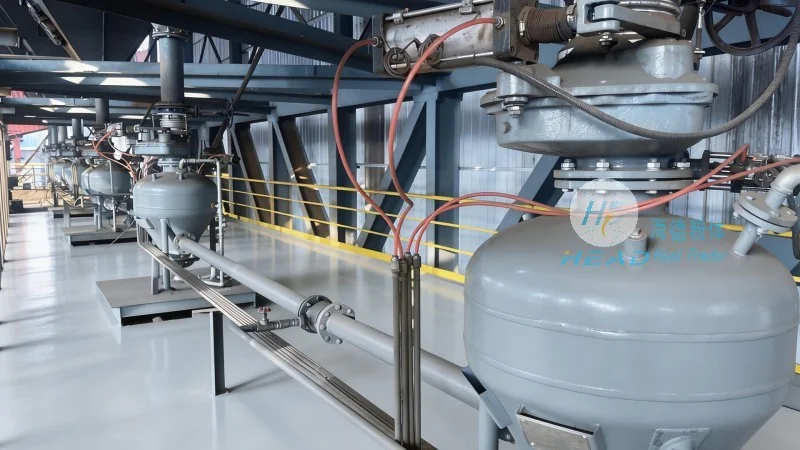
The pneumatic conveying system for zeolite particles provided by Head Powder uses positive or negative pressure dense phase conveying technology, allowing the zeolite particles to be smoothly transported to the workstation within a sealed pipeline through airflow. The system can customize transmitters, pipeline direction, elbow curvature, and separation devices according to material characteristics, supporting multi-point feeding, remote control, and intelligent integration, suitable for petrochemical, environmental protection, building materials, and water treatment fields.
Product advantages
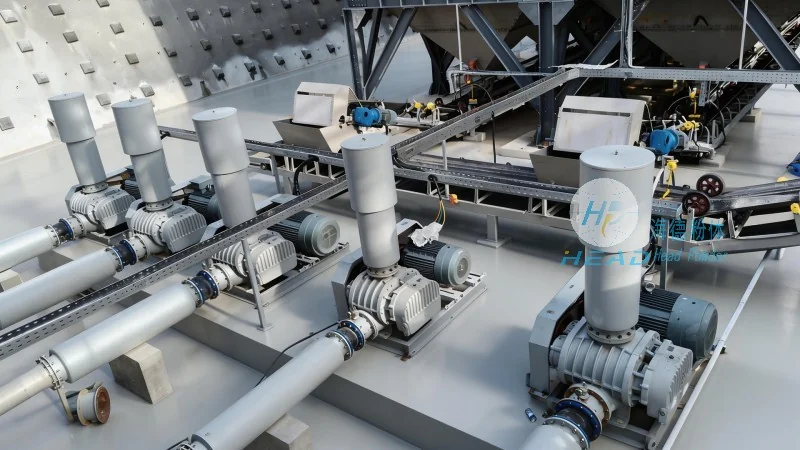
To address customer pain points, this solution achieves fully sealed dust-free conveying throughout the process, effectively suppressing dust dispersal; By optimizing the gas-solid ratio and conveying speed, the particle breakage rate is reduced; The modular design makes installation and maintenance more convenient, while allowing flexible expansion according to production capacity requirements. The system is equipped with automatic blockage clearing and pressure monitoring functions, reducing downtime and lowering overall energy consumption by 15%~25% compared to traditional mechanical conveying.