

Pneumatic conveying solution for lactose powder
During the processing and transportation of lactose powder, issues such as dust flying, pipeline blockages, and material moisture and clumping are often encountered. Traditional mechanical conveying methods are prone to cross-contamination and struggle to meet GMP clean production requirements. Companies urgently need a sealed, efficient, and low-damage conveying solution to improve production continuity and reduce maintenance costs.
Material characteristics
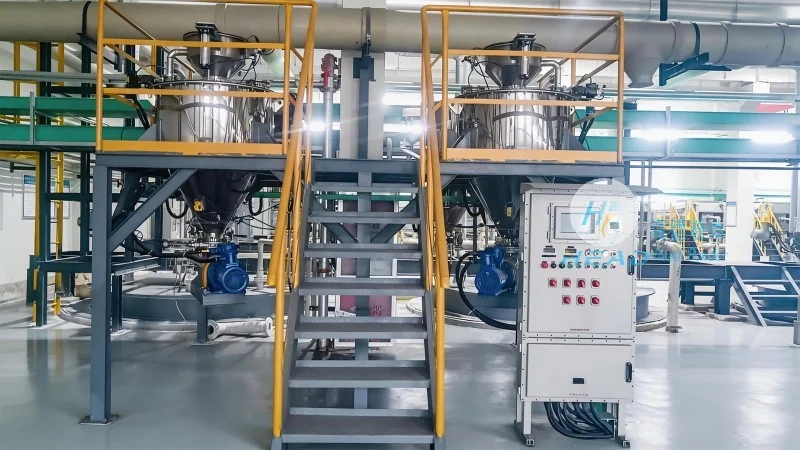
Lactose powder is characterized by moderate fluidity, easy moisture absorption, and a narrow particle size distribution (usually 30~200 mesh). Its bulk density is about 0.5~0.8g/cm³, with a rest angle between 40°~50°, sensitive to shear forces, and prone to static electricity in high-speed airflow, which can cause dust explosion risks. Therefore, pneumatic conveying design must focus on explosion-proof, moisture-proof, and low breaking rates.
Product Introduction
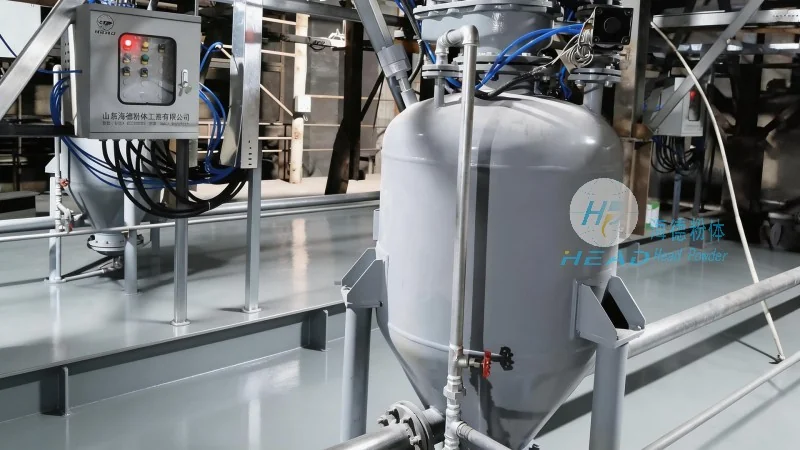
This lactose powder pneumatic conveying system is custom-developed by Head Powder based on material characteristics, using positive pressure dense phase or negative pressure dilute phase conveying methods, with fully sealed pipeline operation. The system includes core components such as feeders, conveying pipelines, rotary valves, dust collectors, and automatic control systems, allowing for more accurate control of conveying speed and gas-solid ratio, helping lactose powder maintain its original particle size distribution and chemical stability throughout the conveying process.
Product advantages
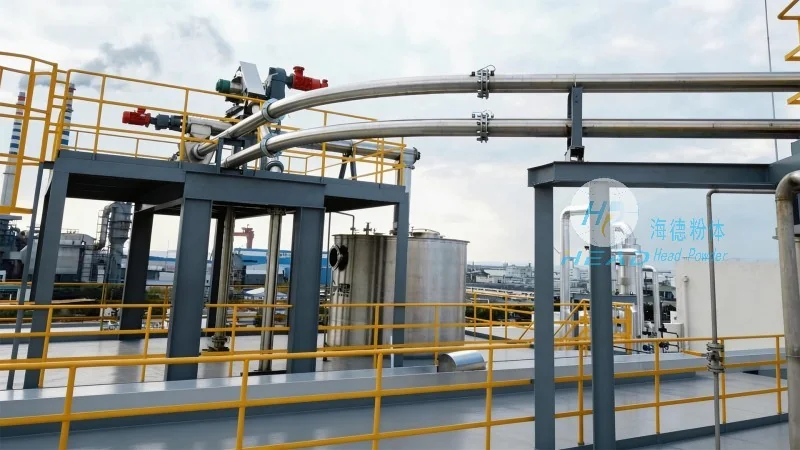
To address the pain point of dust leakage, the system adopts a fully enclosed structure, equipped with online reverse blow dust removal and anti-static grounding devices, eliminating leaks and explosion hazards at the source. To address pipe blockage issues, multi-point pneumatic thrust and fluidized blow assists are introduced to ensure smooth passage of materials through elbows and lifting sections. For hygiene requirements, the inner wall of the pipe is polished to Ra≤0.8μm, supporting CIP online cleaning to prevent material residue and bacterial growth. The entire solution achieves automated continuous conveying, reducing manual intervention and helping enterprises achieve clean production and energy-saving consumption reduction goals.