

Lactose pneumatic conveying solution
In industries such as food and pharmaceuticals, lactose is a common excipient and faces many challenges during transportation: materials easily absorb moisture and clump together, particles are easily broken, dust is easily dispersed causing cross-contamination, and long-distance sealed transfer is difficult. These pain points directly affect product quality, production efficiency, and workshop safety.
Material characteristics: The physicochemical properties of lactose
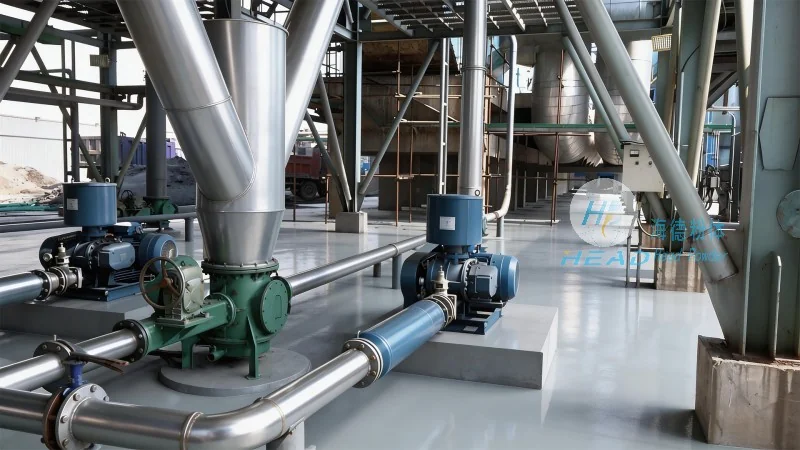
Lactose is a white crystalline powder or granules, with a density of about 0.5-0.8 g/cm³, a relatively large repose angle (about 40-55°), and moderately weak flowability; Strong moisture absorption; when relative humidity exceeds 50%, it easily absorbs moisture and becomes sticky; The particles are highly brittle, and during conveying, mechanical shearing easily produces fine powder; It also exhibits the usual tendency to stick to walls. These characteristics require the conveying system to be sealed, moisture-proof, shatterproof, and easy to clean.
Product Introduction: Head Powder Lactose Pneumatic Conveying System
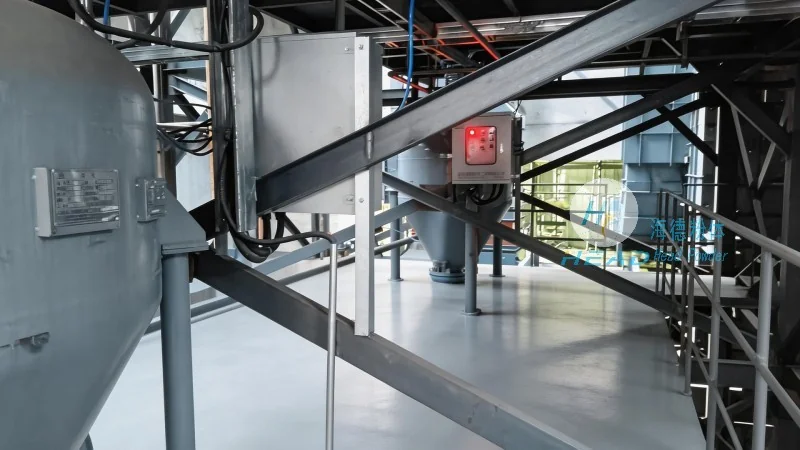
Head Powder has developed customized pneumatic conveying solutions and supporting equipment tailored to the characteristics of lactose materials. The system uses positive pressure dilute phase or dense phase conveying methods, using gas power to transport lactose granules or powders through sealed pipelines to the production process. The complete set of equipment includes key components such as rotary feeders, pneumatic conveying pipelines, dust removal devices, and control systems, allowing flexible design according to customer capacity, conveying distance, workshop layout, and more.
Product Advantages: Targeted solutions to customer pain points
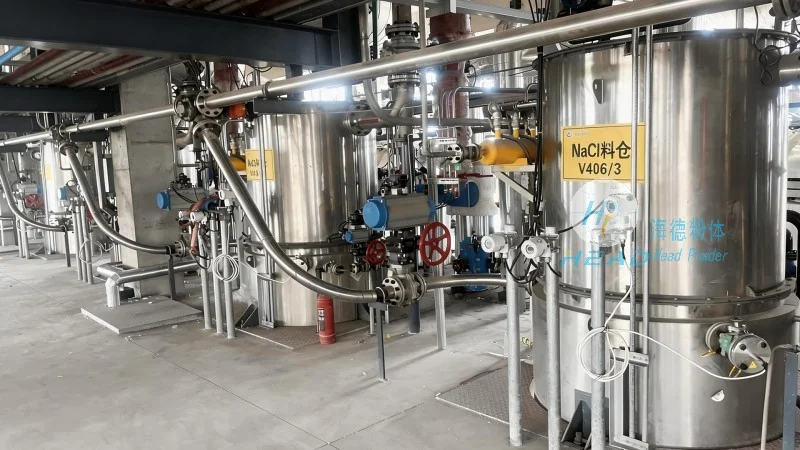
The system uses a fully enclosed pipeline design to effectively prevent dust leakage and avoid cross-contamination; Low-speed dense phase conveying technology reduces particle collision and crushing rates; Equipped with online dehumidification and temperature control modules to suppress the risk of moisture absorption and caking; The modular structure supports quick assembly and cleaning, meeting GMP hygiene requirements; The intelligent control system monitors conveying pressure, flow rate, and other parameters in real time, helping to ensure stable and efficient normal operation.