

Pneumatic cocoa powder conveying solution
During cocoa powder processing and production, enterprises often face issues such as dust leakage causing harsh working environments, material moisture and clumping affecting flowability, low manual handling efficiency, and safety hazards. Traditional conveying methods not only cause raw material waste but also fail to meet food-grade hygiene requirements, urgently requiring a reliable and clean automated conveying solution.
Material characteristics
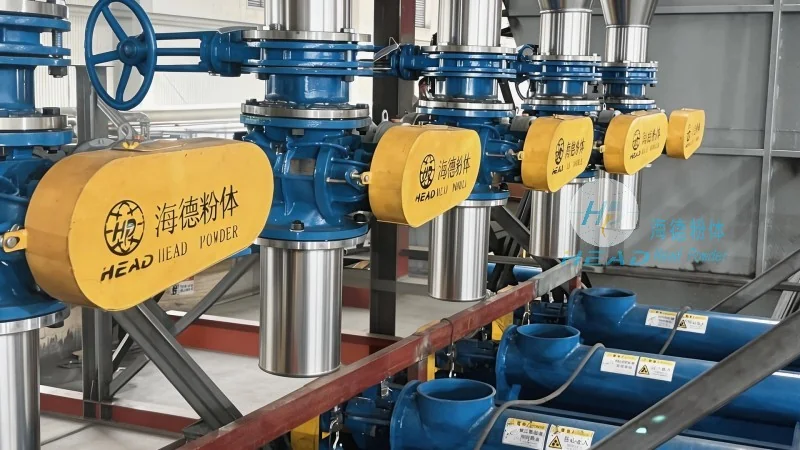
Cocoa powder is a lightweight, easily flyable powder material with fine particle sizes (usually 20~150μm), characterized by typical hygroscopic and adhesive properties. Its moisture content must be strictly controlled between 2%~5% and it is temperature-sensitive. During conveying, avoid high temperatures and severe collisions, and consider the risk of dust explosions (with lower explosion concentrations around 50g/m³). Therefore, the conveying system must have sealing, explosion-proof properties, and gentle handling capabilities.
Product Introduction
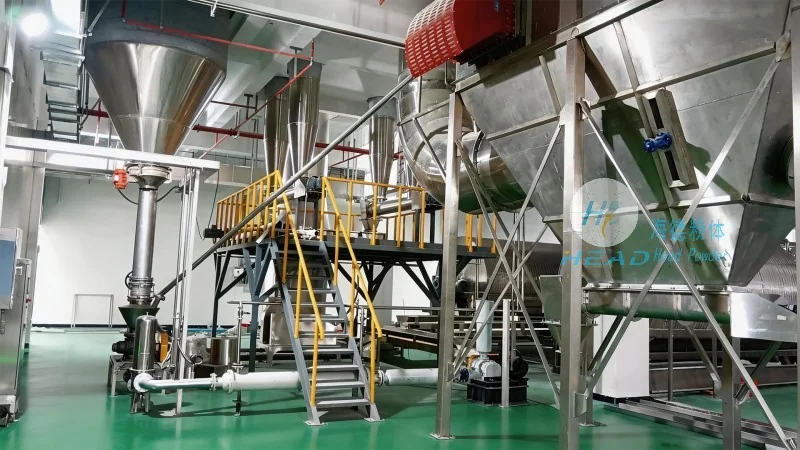
Head Powder's cocoa powder pneumatic conveying system uses positive or negative pressure dense phase conveying technology, stably transporting cocoa powder from the storage silo to the production station through sealed pipelines. The system includes a feeding device, conveying pipelines, gas source equipment, dust separator, and intelligent control unit. It can be customized according to customer site layout, production capacity requirements, and material characteristics to achieve fully automated and dust-free operations.
Product advantages
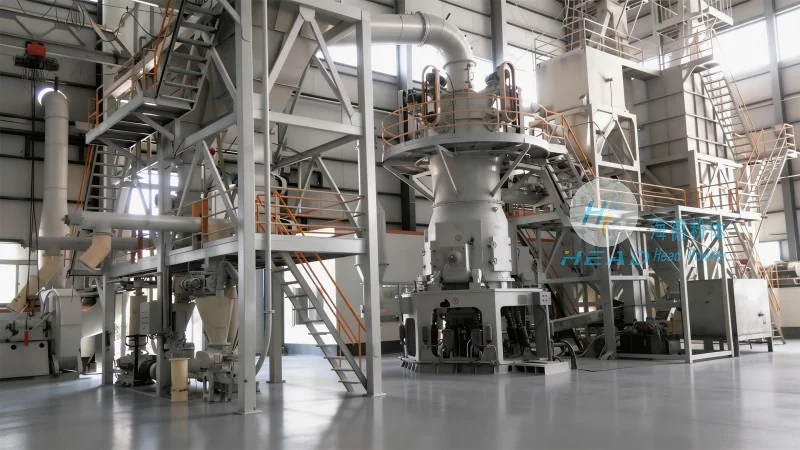
To address customer pain points, this solution offers the following solutions:
1. Fully enclosed pipeline conveying to prevent dust leakage and improve workshop environment;
2. Uses low-flow, high-concentration dense phase conveying to reduce material damage and caking;
3. The system is equipped with explosion-proof valves, electrostatic grounding, and inert gas protection to support safe production;
4. PLC + touchscreen control, supports remote monitoring and data recording, reducing manual intervention;
5. Modular design for easy expansion and maintenance, adapting to different production capacity requirements.