

Pneumatic conveying solution for alumina micropowder
During the production and transportation of alumina micropowder, many enterprises often face a series of practical issues such as dust emissions, pipeline blockages, material damage, and excessive energy consumption. Micropowder particles are extremely fine, which easily leads to degradation of the production environment and raw material waste; conventional conveying methods struggle to balance efficiency and safety. To address these industry pain points, Head Powder offers customized alumina micropowder pneumatic conveying systems to help customers achieve clean, stable, and energy-saving material conveyance.
Material characteristics
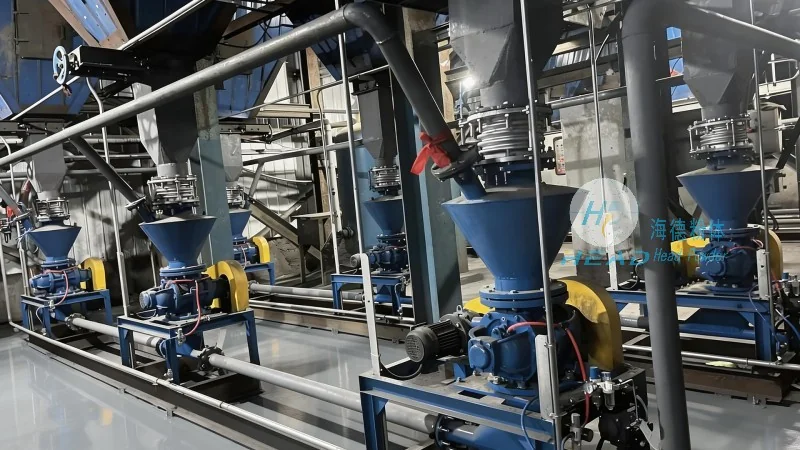
Alumina micropowder is a high-hardness, fine-grained powdery material, typically ranging from several hundred to several thousand mesh. It is characterized by poor flowability, easy dust generation, and easy moisture absorption and caking. During transportation, improper handling can easily cause pipeline wear, blockage, and material agglomeration, requiring high standards for equipment sealing and system stability.
Product Introduction
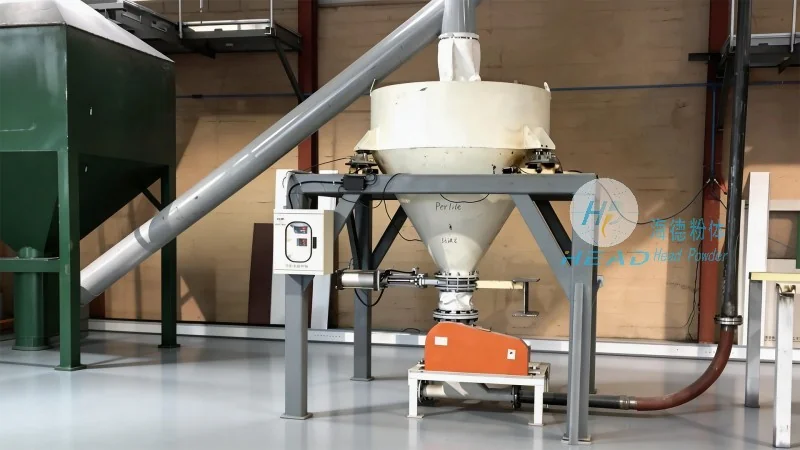
The alumina micropowder pneumatic conveying system developed by Head Powder uses sealed conveying methods of positive or negative pressure, and is customized to meet customers' on-site conditions and material characteristics. The system consists of a feeding device, conveying pipelines, air source equipment, separation and dust removal unit, and intelligent control modules, enabling fully automated conveying from the raw material silo to the point of use, effectively reducing manual intervention and environmental pollution.
Product advantages
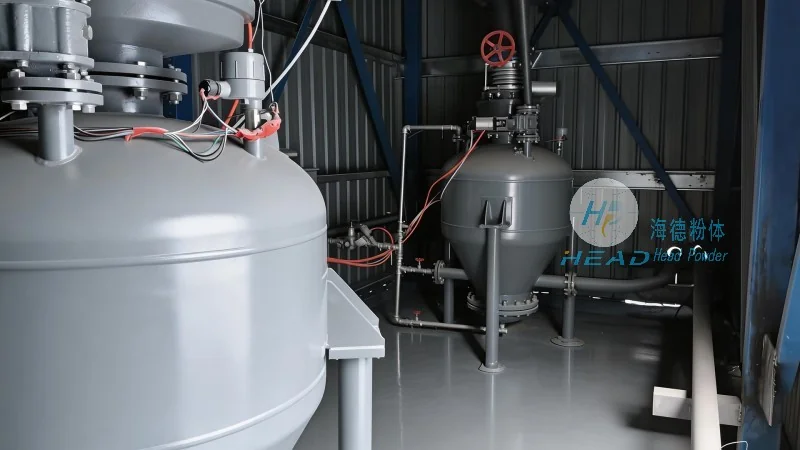
To address core pain points such as dust leakage, pipeline blockages, and high energy consumption during alumina micropowder transportation, Head Powder has incorporated multiple optimization measures into its design: using highly sealed rotary valves and baghouse dust collectors to ensure dust-free operation throughout; Equipped with anti-blockage air cushions and fluidization devices to improve material flowability; Adjust the gas-solid ratio through intelligent control algorithms to reduce unit energy consumption during conveying; At the same time, to address the issue of high material hardness, wear-resistant pipes and elbows are selected to extend equipment service life. The overall solution balances efficiency, safety, and ease of maintenance.