

Pneumatic conveying solution for ternary materials
In the production of lithium battery cathode materials, ternary materials are widely used due to their high energy density and long cycle life, but their powder characteristics—such as fine particle size, easy agglomeration, easy moisture absorption, and sensitivity to impurities—pose many challenges for traditional manual or mechanical conveying. During material transfer, it is highly likely that dust will fly and cross-contamination will occur, which not only affects product purity but also leads to frequent cleaning on the production line and increased labor costs. At the same time, some ternary materials are mildly corrosive, making it difficult for conventional equipment to operate continuously and requiring frequent maintenance shutdowns, which seriously restricts production efficiency and batch consistency.
Material characteristics
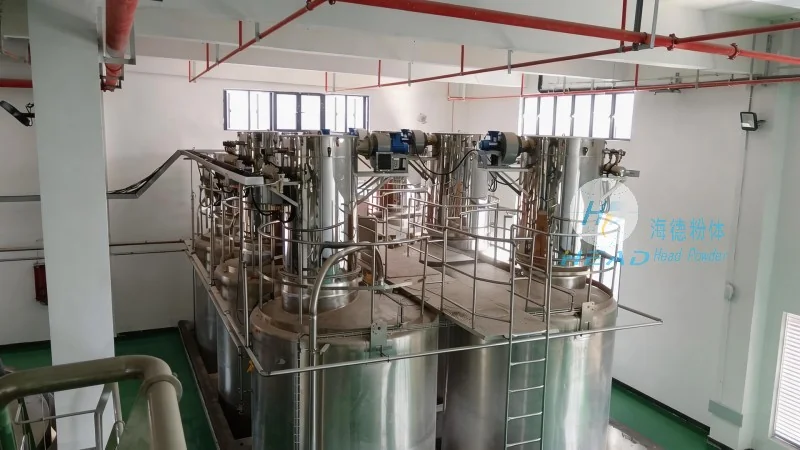
Ternary materials (such as NCM/NCA) are powders from micron to nanometer scale, with a true density of about 4.5–5.0 g/cm³ and a bulk density of 0.8–1.5 g/cm³. They have moderately weak flowability, are prone to moisture absorption and caking, and are sensitive to temperature and humidity. Its particles have high surface activity, so during conveying, it is necessary to avoid the mixing of metal foreign matter caused by high-speed impacts; Some models have weak magnetism, requiring pipelines and equipment to be rust-free and free of dead corners. In addition, the material has moderate abrasiveness, posing wear risks to key components such as elbows and valves.
Product Introduction
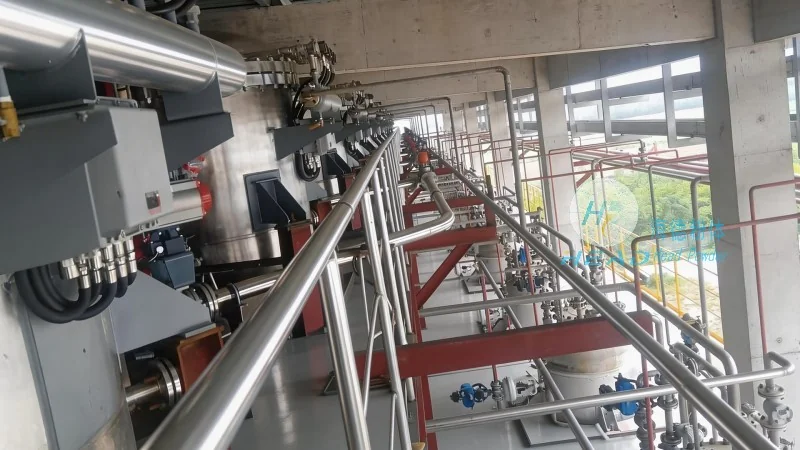
Head Powder has launched a customized pneumatic conveying system for ternary materials to meet the special needs of the ternary materials industry. This system uses sealed pipeline conveying, using compressed air or inert gas as carriers to smoothly transport ternary materials from the feed end to downstream processes such as mixing, drying, sintering, and packaging. Core components are made of food-grade or corrosion-resistant materials, with polished inner walls to eliminate dead corners. Combined with efficient dust and iron removal devices, the transportation process is pollution-free and leak-free. The system can be customized according to customer production line layouts for positive-pressure dilute phase, positive-pressure dense phase, or negative pressure suction modes, flexibly matching different capacities and material characteristics.
Product advantages
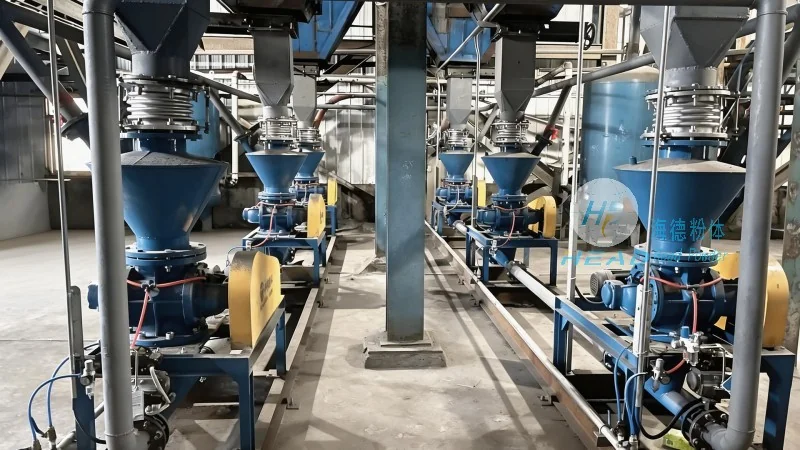
To address common pain points faced by customers such as dust pollution, purity decline, and frequent maintenance, the Head Pneumatic Material Pneumatic Conveying System offers the following solutions:
- Fully enclosed conveying: Sealed throughout the entire process from the feeding point to the discharge point, preventing dust leakage and meeting environmental protection and occupational hygiene requirements.
- Low shear and low damage: Optimizes airflow velocity and pipeline structure to reduce material collision and breakage, maintaining particle morphology and electrochemical properties.
- Anti-contamination design: The inner wall of the pipeline has no dead corners, equipped with high-efficiency iron removers and filtration devices to prevent metal debris and oil contamination from entering.
- Automated control: Integrates PLC and touch screen to achieve automatic start-stop during conveying, parameter monitoring, and fault alarms, reducing manual intervention and improving batch stability.
- Corrosion resistance and long lifespan: Key components use stainless steel 304/316L or wear-resistant ceramic linings, suitable for ternary materials in weak acidic and alkaline environments, extending equipment maintenance cycles.