

Pneumatic conveying solution for soda ash powder
During the conveying of soda ash powder, traditional mechanical conveying methods often face challenges such as dust flying, equipment wear, and material moisture and clumping, which not only affect the production environment but also lead to material loss and high equipment maintenance costs. To address these pain points, Head Powder offers professional customized soda ash powder pneumatic conveying solutions and system equipment, helping users achieve clean, efficient, and stable material transfer.
Material Characteristic Analysis
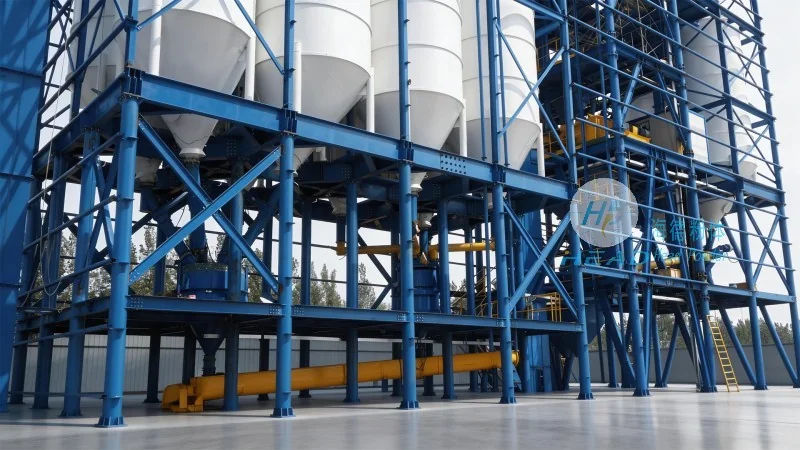
Soda ash powder has the following notable characteristics: easy to absorb moisture and clump, fine particle size (usually 100-400 mesh), average fluidity, and generally corrosive to metals. At the same time, soda ash powder tends to generate static electricity during transportation and is sensitive to temperature. These characteristics require the conveying system to have good sealing, moisture resistance, and corrosion-resistant design, while also requiring precise control of airflow speed and pressure to avoid material crushing or pipeline blockages.
Product Introduction
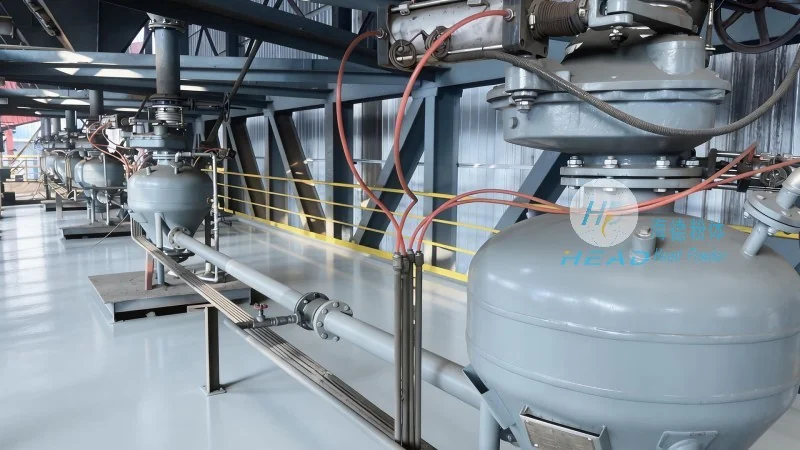
The soda ash powder pneumatic conveying system developed by Head Powder uses positive or negative pressure dense phase conveying methods, equipped with dedicated stainless steel pipelines, rotary feeders, dust collectors, and automatic control systems. The system can be custom-designed according to customers' site layouts, conveying distances, and output requirements, supporting multi-point feeding from storage tanks to reactors and packaging machines. Core components are made of corrosion-resistant materials, and the sealed structure effectively prevents dust leakage, ensuring a pollution-free entire process.
Solutions and advantages
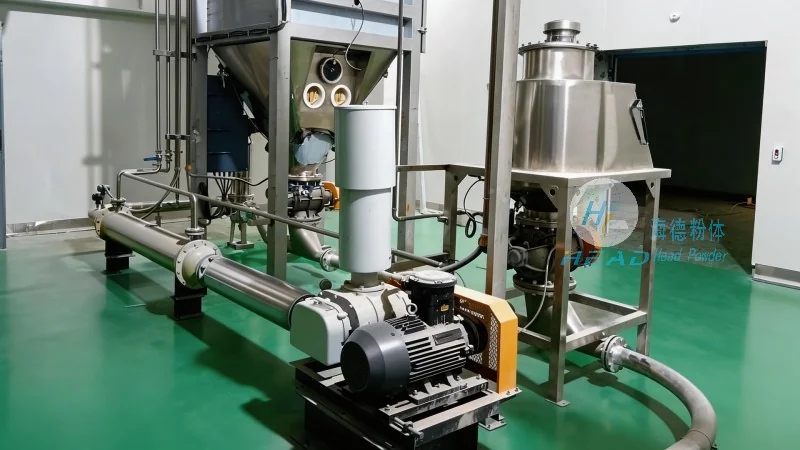
To address the pain points of soda ash powder being prone to moisture absorption and clogging, Head Powder has incorporated the following measures into its system design:
- Pneumatic conveying combined with dry gas pretreatment reduces material moisture and prevents caking.
- The inner walls of pipelines are polished and anti-static grounding is installed to reduce material snagging and static electricity buildup.
- Equipped with intelligent pressure monitoring and backblowing devices to adjust conveying parameters in real time to prevent pipeline blockages.
- Modular design facilitates maintenance, supports remote control and centralized management, and reduces manual intervention.
With these solutions, users can reduce material waste (by about 3%-5%), improve workshop environments (dust concentrations below national environmental standards), extend equipment service life (more than twice as much as traditional mechanical conveying), and achieve continuous, stable automated production.